


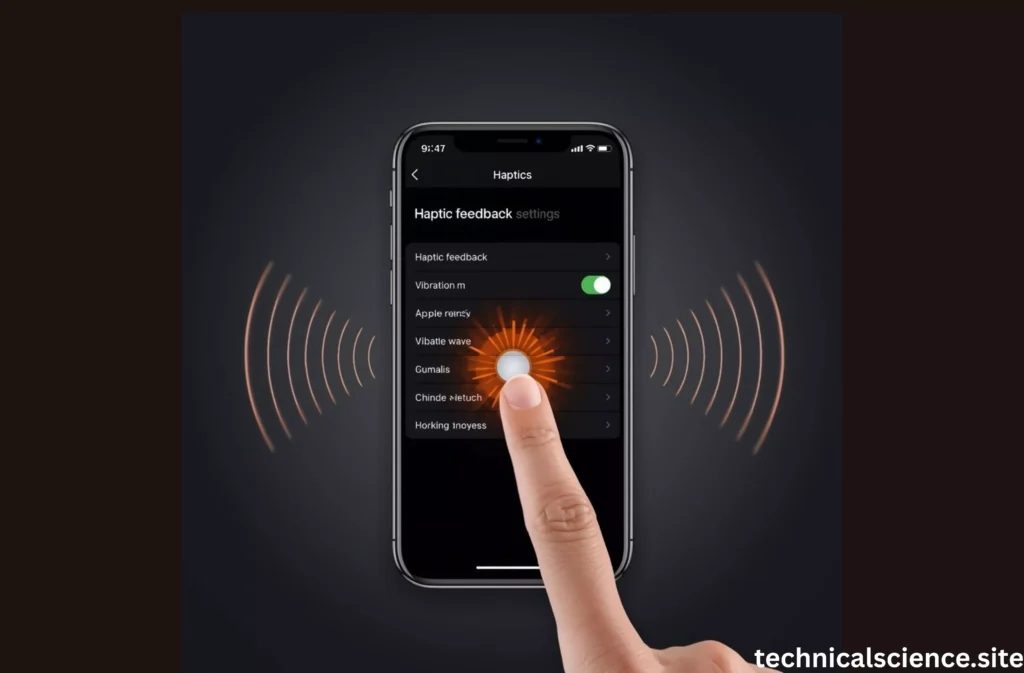
Have you not been wiring your iPhone when typing, swiping or unlocking, and felt it vibrating? That is what is known as haptics on iPhone small vibrations that make it feel more authentic and alive. These are feedback senses that assist you in feeling each touch. We will discuss the meaning of haptics, their working principle, and the importance of the same.
What Are Haptics on iPhone?
The Haptics on the iPhone are small vibrations that are aimed at making your activity with the phone feel natural and gratifying. You have received a little vibration when you push a button, type a message or use Face ID. This feedback is generated with the help of a special component known as the Taptic Engine which converts your actions into little physical response. Haptics in the iPhone are fine, gentle, and timely as opposed to the strong and unpleasant vibrations of traditional phones.
These haptics are primarily aimed at feeling like you are touching real buttons or objects, despite the fact that you actually are just working on a flat screen. This assists your brain to get your actions as full. An example is when you switch a setting or check through your notification, the haptic on the iphone system gives you a brief pulse to make you realize that your command has been registered. It is a minor detail that makes the usability much better.
Haptic feedback is based on the concept of touching in humans Apple desired people to feel their iPhone. This is a bonus of real-life comfort when it comes to digital interaction. As an example, after long pressing an application icon the soft vibration that ensues is an indication that you have entered the editing mode. In much the same way, when you press the shutter button of a photograph, the shot seems to be a real button being pressed.
Concisely, what are iPhone haptics? They are how Apple has introduced touch into technology. Such vibrations not only make actions more receptive but also increase the accessibility where users with visual or hearing impairment feel safe as they manipulate their iPhones.
How System Haptics on iPhone Work?
iPhones haptics system is based on the cooperation of sophisticated hardware and software. The center piece of this technology is the Taptic Engine of Apple, which is a custom vibration motor that is much more accurate than conventional vibration motors. Rather than shaking the whole phone, it generates micro-vibrations that are small and limited and appropriate, lasting fractions of a second to be felt but not annoying.
When you touch or play with your screen, your iPhone sends you an immediate signal to Taptic Engine. This engine will then generate a different pattern of vibration according to the action that you did. As an illustration, when you drag the notification bar, you touch it and it will give you a gentle tap to assure you that it is open. When you press a virtual button, a virtual button may press a real button so that it feels like you are pressing a real button.
This mechanical feedback/visual response produces the effect of reality. The vibration is also perfectly synchronized with the display animation, that is why haptics on the iPhone are so smooth and natural. The iPhone does not vibrate randomly as it is programmed to react differently to various incidents.
Say, as you type you will have the sensation of tapping something rhythmically with each button you strike. The haptic pattern is longer and stronger when taking a call. Even actions of the system (going to silent mode or Face ID on), have their own slightly felt vibrations. Such detail is what makes system haptics on the iPhone distinctive compared to the common phones.
Nevertheless, this feedback may burn a little battery electricity. Other users turn it off in order to conserve energy, whereas others have it on to enjoy the added use. The good thing is that Apple leaves that to you and you can determine the extent of feedback.
How to Change Haptics on iPhone?
Customization is one of the greatest aspects of iOS, and it is also not hard to change haptics on iPhone. Apple understands that everyone prefers something different; those people might find it nice to touch each tap whereas others might prefer to have a silent and smooth experience.
The process to customize or modify your haptic settings is as follows:
- Open the Settings app.
- Tap on Sounds and Haptics (on others, it’s Sound and Vibration).
- After scrolling down, it becomes System Haptics where it is turned ON or OFF.
In case you want to adjust the vibration intensity, visit Settings Accessibility Touch Vibration. At this point you can set the level up or off all vibrations.
This is a control that can be used to customize the feel of your phone. As an example, when typing often, you may have light haptics on the keyboard and turn off others. You are also able to customize the vibration pattern of calls, texts and alerts so that every action has a different feel.
By using haptics on an iPhone, you are not simply turning vibrations on or off, but redefining the relationship between your phone and you. Most people can say that a small vibration response makes the phone more responsive. However, when you are in need to save battery or are distracted by the feedback, then it might be better to turn it off.
Apple created haptics to ensure that every action is significant such that whether they are on or off, it is up to you to decide how you want your iPhone to touch.
Should iPhone Haptics Be On or Off?
The question that many individuals would ask themselves is: Should iPhone haptics be on or off? It will depend on the use of your phone and what you like. Having haptics on is advantageous in a number of ways. It improves the interaction with users, gives them feedback on what they are doing, and it makes the iPhone appear to be more high-end.
When the haptic features of the iPhone are on, you can actually feel that you have pressed a button or you have been alerted. This assists you to remain closer to what is going on on the screen. It also comes in perfectly handy when one wants to know that his/her touches are being reflected such as typing, deleting, or switching on or off a setting.
Conversely, there are users who switch off haptics due to distraction or not being used. When your iphone is always responding to you, you may at times feel that it is active. Also, although it is minimal, haptics does consume some battery power. System haptics can be disabled which is a smart step to take against users who want to extend their battery life.
Generally, should you enjoy physical feedback and prefer more interactive, you should leave on system haptics on the iPhone. However, in case you do not want to hear the buzziness and smooth sailing, setting them off will not damage your device.
At Apple you have the entire freedom. You can do an experiment by having haptics on during a few days, after which you can switch them off. Observe the difference and choose what environment you are more comfortable in.
Fixing Issues: Haptics on iPhone Not Working
In some cases, users also are experiencing haptics on the iPhone not working and it can be frustrating to realize that you are used to that gratifying feedback. Luckily, the majority of haptic issues have small settings or software bugs that are simple to correct.
First, check your settings. Go to Settings Sounds and Haptics and ensure that System Haptics is switched ON. When this feature is disabled, your iPhone will not give you any haptic feedback, even to other vibrations. The next step is to check Accessibility Touch Vibration so that the option of vibration could also be on.
In case all appears to be well and the haptics still fails, then restart your device. The temporary glitches of the Taptic Engine can be cleared by a simple restart. The other thing that you can do is to ensure that your iPhone is updated. Head to Settings General Software Update and update on any available update because Apple often corrects such bugs and the updates.
When all these checks have been done, and your haptics on iPhone are not functioning, then it may be a problem with the Taptic Engine itself. Then, it is better to go to an Apple store or a certified repair center and get it fixed professionally.
Simple tasks such as typing, turning on the Silent Mode or swiping down the control center are also an opportunity to test haptics. When all these measures fail to cause a vibration it proves an underlying problem. Nonetheless, on 90 percent of occasions, the issue is corrected by changing settings or rebooting the phone.
Conclusion
Haptics iPhone captivates your phone through touch. They provide comfort, feedback and realism in each action. You can keep them on or off; however, regardless, it is best to know how they operate and how to enable haptics on iPhone in order to be able to experience a more personalized and satisfying user experience.
FAQs
Yes, Haptics is a type of feeler that can provide feedback when you touch an iPhone button, type, or press a key. They are finer and gentle compared to normal vibrations.
Go to Settings Sounds & Haptics and switch the System Haptics to OFF. All vibration may be turned off as well, at the place Accessibility Touch Vibration.
iPhone haptics can be customized by enabling the iPhone to change the vibration pattern and intensity in Sound and Haptics settings or accessibility. This allows you to regulate the intensity or weakness of the feedback.
Read Also: