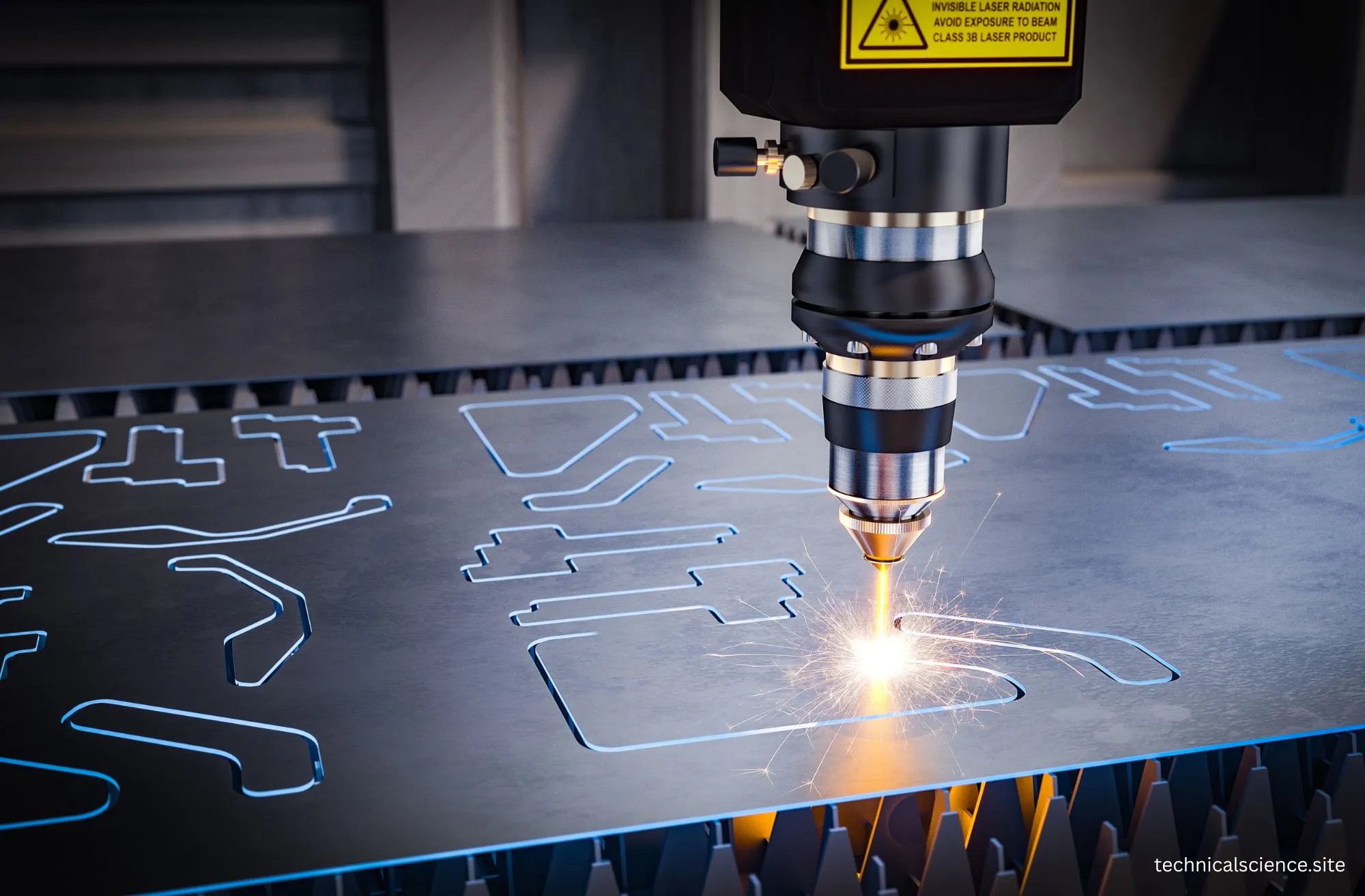
One of the technologies that is transforming how gun owners customise firearms is through a laser gun engraving machine. It provides accuracy, longevity and artistic freehand you have never seen. It is a perfect tool for both professionals and hobbyists.
What is a Laser Gun Engraving Machine?
This is a machine which specifies custom designs, text or series put on the faces of guns by etching concentrated laser beams across surfaces. It is applied on metals such as steel, aluminium and titanium. The artwork is finely carved and detailed. It gives not only aesthetics to guns, but also traceability.
How Does It Work?
A gun laser engraver is applied by pointing a beam of light at the gun. Using the beam, heat the area, mark it, and move the material or disc. Designs may be uploaded using computer software. Your drawing serves as a guide, and the laser machine tracks it accurately.
Benefits of Using Laser Gun Engraving
The tool also creates very precise engravings. Even the smallest font or image remains sharp. Engravings do not wear out, nor do they wither in water or rust. They last for years, unlike printed or painted ones. It is unnecessary to have physical contact to engrave on the gun, which minimises damage or tension on the gun.
Perfect for Custom Design
Identification of weapons (firearms) is enforced in a good number of areas. The gun laser engraver assists in engraving the safety signs, the safety marks, as well as the serial numbers and model information legally. Accuracy ensures quality in readability and permanence. It is also utilised by law enforcement in the marking of seized or registered firearms. The engraving laser markings meet the requirements of ATF in the U.S.
Compliance with Gun Laws
Gun owners have a lot of liking for customising their guns. They can apply tactical marks, names, or logos using a laser engraver machine on their weapon. Military badges, patriot emblems, it will do. The artistic sphere is inexplicable. Gun shops are suitable business outlets that can be leveraged as value-added services because they handle firearms.
Types of Laser Engraving Machines
Three variants of them are major:
- Fibre Laser Engraver – Suitable for engraving metal guns, it features deep engraving.
- CO2 Laser Engraver – It will suit the polymer gun parts.
- UV Laser Engraver –A perfect tool when those minimal markings are needed and plastics are involved.
- The most popular laser to be used in customising firearms is the fibre laser.
Materials Supported
A laser gun engraver can work on a variety of gun parts. These include:
- Gun slides ( stainless steel )
- Barrels ( carbon steel)
- Lower receivers (aluminium)
- Grips (polymer or wood),
It also engraves accessories, such as scopes and publications, tactical knives, etc.
Software and Control Options
The equipment is either armed with software or it may support software such as LightBurn or EZCAD, or it may support LaserGRBL. These make it easy to control the design layout, power and speed. Inserted art can be in DXF, SVG, or PNG file formats. It is possible to take a preview of designs before the engraving process.
Portability and Desktop Options
Compact-sized laser engravers are now on the market. Laser machines popular with small businesses and home users are desktop gun engravers. These are power-saving, lightweight, secure machines. Others provide attachments in the form of a rotary that fits cylindrical components of the gun.
Safety Features
New laser machines come with safety housing, an emergency stop button, and protective eyewear. Class 1 enclosures protect against detrimental exposure to light. Air-assisted machines minimise smoke and dust deposits when engraving the safety certifications help ensure conformity to workplace standards.
Laser Power and Depth Control
Laser equipment is available in various power ranges, including 20W, 30W, 50W, and 100W. Greater wattage enables deep cutting in firearms and may be appropriate for 3D or deep land- or laser-etched surfaces. Lower wattage can leave visible marks on coated or anodised surfaces.
Speed and Productivity
Engraving rates of up to 7,000 mm/s, depending on the material or design. This boosts the commercial production rates. The subspeed allows it to be the perfect fit for high-volume gun shops and companies that specialise in firearm customisations.
Cost and Investment
The price ranges between $1,200 and $ 6,000, depending on the specs and features. Lasers are used as a fibre, but they are expensive and more effective in metal components. CO2 machines are cheap and effective for plastics. ROI is achieved quickly in business applications, thanks to the increasing convenience of custom gun works.
Laser Engraving vs Traditional Methods
Etching, stamping, or chemical marking are methods used, among others. They are usually also time-consuming, dirty and less precise. Laser gun engraving machines eliminate the need for manual contact. No tools ever come into contact with the gun to take away from its quality. Laser is faster, cleaner, and provides the best detail.
Popular Use Cases
Custom one-off firearm logos and names
- Military badges
- Serial key gen
- Manufacturer branding
- Gun gift engraving
- Tactical weapon engraving
These cases make a laser engraver a must-have for gun shops.
Conclusion
A laser gun engraving machine will be the best solution for precise firearm customisation. It is the best tool, whether it is needed for legal compliance, branding, or simply to look good. Compact, industrial-grade, high-powered, and reliable, it scales industrial quality to the workbench. There will be a further increase in laser engraving as gun owners pursue personalisation.
FAQs
It’s very true, CO2 and UV laser engravers work perfectly on polymer and plastic gun parts.
Absolutely. Serial numbers and legal compliance often require it, particularly in the U.S.
A 50W laser will reach a depth of mm on steel or aluminium, 0.5-1mm thick.
Read Also: