


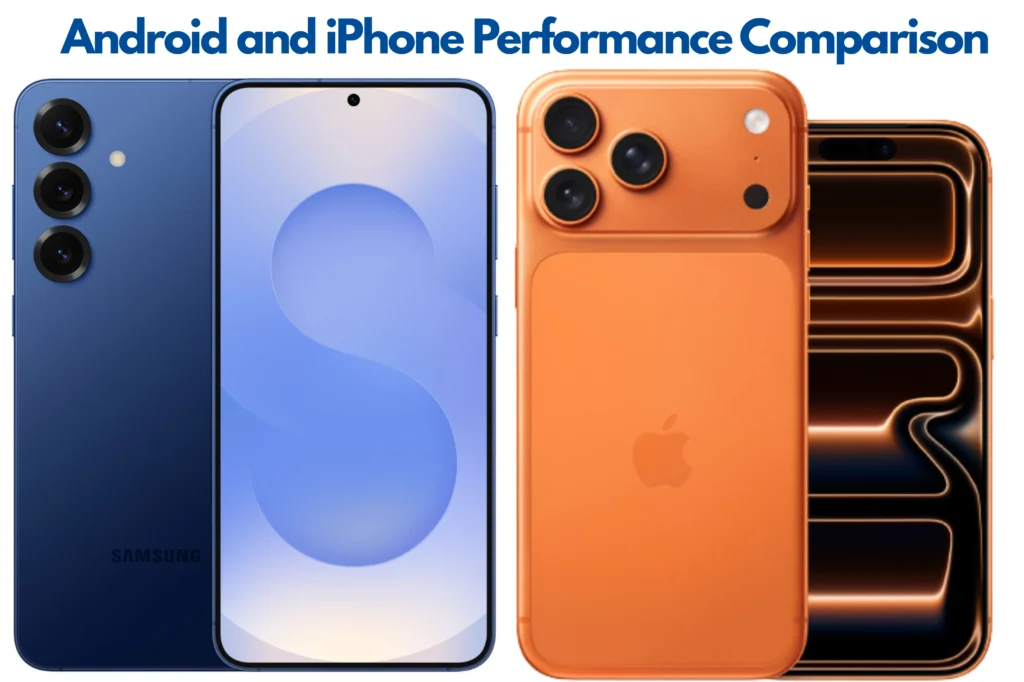
Performance is one of the largest determining factors to the user when purchasing a new smartphone. The question that frequently arises among people is which platform is more responsive, allows easier multitasking, and is more reliable in the long-term. In this Android vs.
iPhone performance comparison, we examine how the Android and iOS systems can be used in everyday tasks, gaming, multitasking, and optimization of the systems. Knowing this smartphone speed comparison, you will be able to choose which platform is really appropriate to you.
Getting to know Android and iOS Performance
Performance is not simply the raw speed but also covers the efficiency of the phone in supporting apps, animations, back-ground processes and system updates. Android and iOS have very different approaches in the Android and iOS debate. Apple has the benefit of managing hardware and software and Android is shared by several companies such as Samsung, Google and OnePlus. This contrast has a significant role in real-life performance and user experience.
Hardware and Processor Optimization
The fact that Apple has custom-designed processors is one of the largest strengths of iPhones. Specialized chips such as the A-series and M-series have been designed to run on iOS giving the hardware and software close integration. This gives quicker application startups, smoother animations and increased efficiency.
The iPhones also perform better in most benchmarks despite having less Ram compared to the Android devices. Android phones, conversely, processors are Qualcomm, MediaTek and Samsung. Android phones powered by Snapdragon are fast and particularly fast in gaming and multitasking. In an actual smartphone speed test, flagship Android devices are as fast or even faster than iPhones in raw power, although optimization remains a factor.
RAM Multitasking and Management
RAM is vital in the performance of multitasking. Android devices tend to have larger RAM and sometimes as much as 16GB and above. This enables a user to have numerous applications running at the same time without reloading. Android has more flexibility and background applications control, which is more desirable to power users.
iPhones on the other hand consume less RAM, but manage it with high efficiency such that they can perform efficiently using less resources. This renders Android and iOS performance to be similar in the day-to-day operations, even though they differ (on paper). In the majority of applications, users cannot feel lag when pushing the phone.
Optimization of Apps and Ecosystem
Another important aspect in this android and iPhone performance comparison is the performance of the apps. The reason why developers usually optimize more on iOS than on other devices is due to the limited variety of devices. This causes the animations to be smoother, the updates faster and the iPhones to perform more steadily.
Android Applications
Android applications are forced to accommodate thousands of devices of various models and this at times results in inconsistencies. Nonetheless, Google has been making massive strides in refining Android over the years. The most used applications, including social media, streaming, and work-related applications, are as fast on iOS as they are on Android.
Gaming Full Blown and Graphics
To the gamers, high performance is highly important. iPhones can be characterized with regular frame rates, strong graphics processing capacity, and sustainability of games. The Metal API enables the developers in Apple to be able to push hardware limits.
Android gaming performance is also based on the device. There are high-performance Android phones that have gaming capabilities, better cooling, and high refresh rates that can outplay the iPhones in some games. Android and iOS, when stacked up, both have great gaming experiences, yet, iPhones are more consistent whereas Android is customizable.
Software Updates and Long Term Performance
The contribution of software updates in ensuring long-term performance cannot be underestimated. Apple offers 5-6 years of updates in the iOS system and makes older iPhones fast and safe. This is a significant strength of Android and iOS debate that is long-term support. Android updates rely on the manufacturers and not every device updates on time. Nevertheless, Pixel phones of Google have started providing a longer update cycle. Comparing the smartphone speed, iPhones are better at aging, whereas Android performance depends on the brand.
Battery Performance and Battery Efficiency
Closely related to battery efficiency is performance, iOS is known to strike a balance between performance and battery life, iPhones are smart in terms of background activity reducing and enhancing smooth operation without taking too much power. Android devices usually have bigger batteries and quicker charge-ups, however, intense background processes may influence the efficiency. Android can be optimized sufficiently to maintain good performance, yet the long-term balance of battery-performance is typically better with iOS.
Customization vs Stability
Android is highly customizable, with launchers, system front-ends, and system customizations. On the one hand, this flexibility is an advantage, on the other hand, sometimes it impacts performance when it is not properly managed. iOS is more concerned with stability and simplicity. Minimal customization means that the performance is uniform between machines. In this Android versus iPhone performance battle users have to be free and optimized or controlled.
Comparison of Smartphone Speed in the Real world
Both platforms are performing remarkably well in their daily activities such as browsing, messaging, video streaming, and navigation. The differences may be evident only in benchmarks or in the extreme cases of usage. Android and iOS are almost instantly responsive and user-friendly to most of the users. The actual decision is based on the preferences of the user instead of the actual velocity. Android is very flexible and multitasking whereas iOS is very stable and reliable in the long term.
The Security Impact and Performance Impact
Security updates also impact performance. The ecosystem that is controlled by Apple minimizes the threat at the background, ensuring the stability of the systems. Android has become much better with increased permission controls and security patches, and performance may differ depending on the software used by the manufacturer. Today in the tests of smartphone speed, security does not play a big role in slowing one of the platforms, allowing both platforms to be safe and efficient.
Which Platform Is Right for You?
iOS is a good option in case you appreciate consistency, long-term updates, and smooth functioning. Android can be a better choice in case you want to be customized, have diversity, and highly powered hardware. This Android and iPhone performance comparison reveals that both systems can not be described as objectively better, it depends on how you will use your phone.
Conclusion
Finally, the Android and iOS performance war is as tight as ever before. iPhones are more optimized, durable and more stable than Android which is flexible, can perform more tasks, and has a variety of hardware choices. In a practical smartphone speed test, the two platforms offer flagship performance performance, which meets the satisfaction of the large majority of users. The right one should be the selection of the one, which will be used according to your style of life, preferences, and speed not only.
Read Also: